

“Just unplug it” is the standard advice when a device is under attack. Often it isn’t that simple.
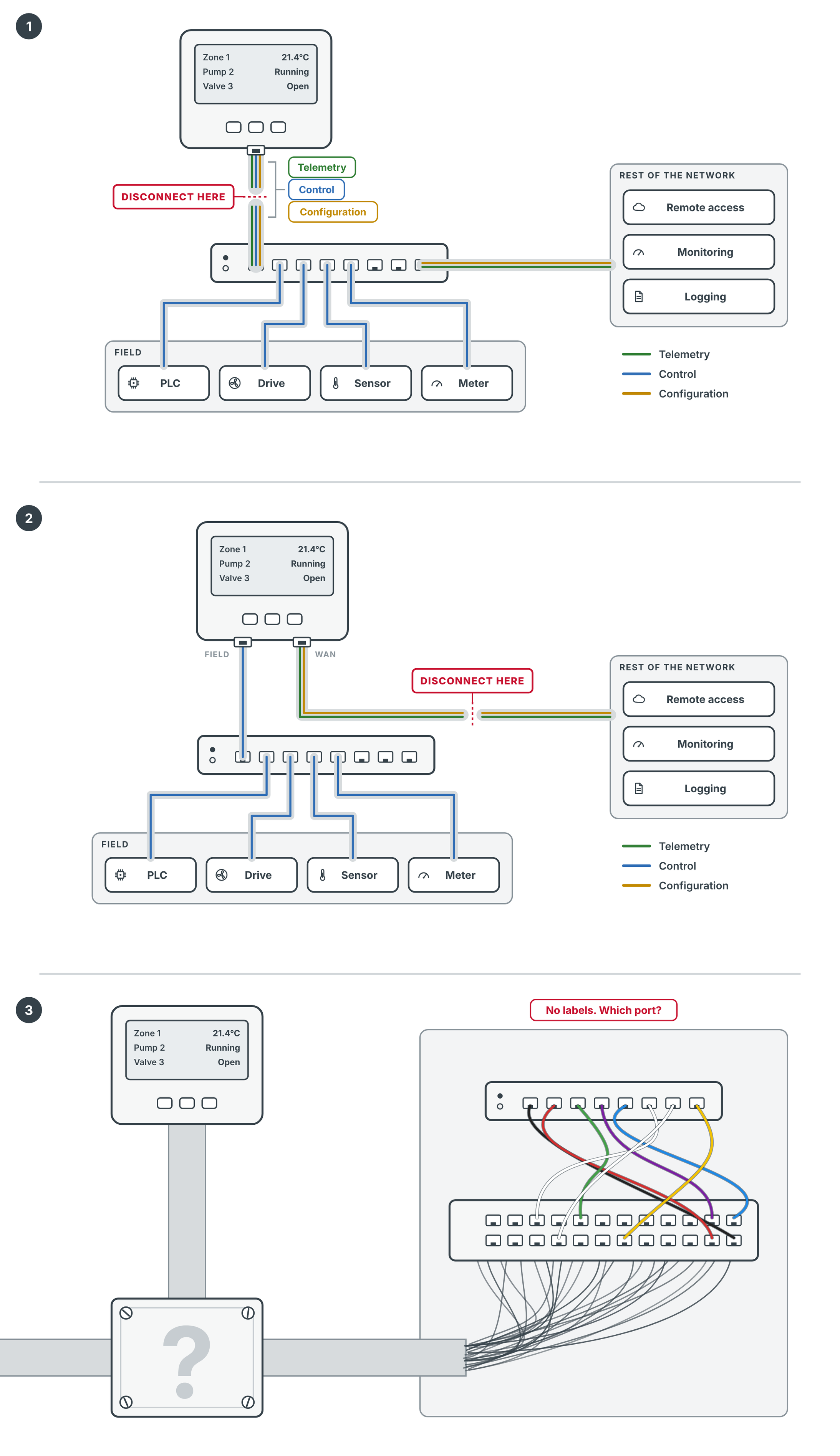
1. One cable. The controller has a single Ethernet port. That cable to the switch carries telemetry, configuration and control to every field device. Pull it and you’ve lost control of the plant. It depends on the site, but a supermarket manager isn’t likely to know that. These systems are generally undocumented.
2. Separate WAN and field ports. Pulling the WAN keeps control running. But we’ve seen devices go into a fault state as soon as the WAN drops. We’ve seen devices that stop working correctly after a power cycle, because they can’t get the time from the network. You don’t know until you’ve tested it.
3. Which cable? It’s glanded into the bottom of the controller, common in refrigeration where there’s water and humidity. In the comms cupboard the switch has no labels and the patch panel has no mapping. You don’t know which cable to unplug. In between there could be managed and unmanaged switches. Even if you pull the right cable, it could be a VLAN trunk, and you take down everything else on it.
Disconnecting is a valid control. Risk assess it, test it, and work it out before the incident.

@cybergibbons
And add wireless/radio interface because laying cables everywhere is too expensive (or just as backup)