
Let’s try and simplify the #OMN

The #OMN Framework: The Five Functions (#5F)
The Open Media Network (#OMN) is not a platform, it’s a human-scale, federated media infrastructure built on #FOSS practices and the #4opens:
- open data
- open source
- open process
- open standards
It doesn’t start with features, apps, or ideology, it starts with flows.
Think in Flows, Not Platforms
Imagine the network as:
pipes and holding tanks
Content (objects) flows through them, communities decide how that flow is shaped. Nothing magical, nothing hidden. This matters because:
If people can’t picture how a system works, they can’t govern it.
And when systems become opaque, power centralises.
So #OMN reduces everything to five simple functions:
1. Publish
(Add a drop to the flow)
Publishing is simply adding an object:
- a story
- a post
- media
- data
to a stream.
- No automatic amplification
- No built-in authority
- No algorithmic boost
Publication is contribution, not domination.
2. Subscribe
(Connect the pipes)
Subscription is how flows connect:
- people
- groups
- topics
- instances
This replaces:
- platform logic → “you are inside us”
with - network logic → “this connects to that”
No opaque ranking, you decide which pipes you connect.
3. Moderate
(Filter and route the flow)
Moderation is not censorship. It’s sieving.
Flows can:
- pass through
- be filtered
- be slowed or prioritised
- be contextualised
Trust is:
- local
- visible
- reversible
Different communities can apply different filters to the same flow.
This is a feature, not a bug.
4. Rollback
(Drain and reset the flow)
Rollback is how systems recover:
- remove past content from your stream
- undo aggregation decisions
- correct mistakes
- respond to abuse
Without rollback:
- errors become power struggles
With rollback:
Accountability becomes procedural, not punitive.
5. Edit Metadata
(Shape meaning downstream)
Content is not rewritten – it is contextualised.
Metadata can include:
- tags
- summaries
- trust signals
- warnings
- translations
- relationships
This is where meaning is created.
Not by algorithms, but by people.
The Holding Tank
Underneath it all is:
a simple storage layer
- a database
- stored objects
- moving through flows
No “AI brain” or hidden feed logic, just data shaped by social processes.
Why This Matters
Most current systems bundle everything together:
- identity
- publishing
- distribution
- moderation
- monetisation
This creates centralised control, even when systems claim to be “open”.
OMN does the opposite:
It separates the core functions.
This makes the system:
- understandable
- auditable
- forkable
- governable
#NothingNew by Design
This model isn’t new, it mirrors systems we already understand:
- plumbing
- electrical grids
- packet-switched networks
- version control
That’s intentional.
Systems people understand are systems people can govern.
From Platforms to Commons
The #5F is the smallest possible set of actions needed to run a media network:
- Publish
- Subscribe
- Moderate
- Rollback
- Edit
Everything else:
- feeds
- timelines
- notifications
- UI/UX
…is just interface, nice to have but not essential.
The Point Is – The OMN is not about building a better platform.
It’s about building:
infrastructure for a democratic digital commons
Simple flows.
Social mediation.
Human control.
Not control systems, but trust systems.
In One Line
#OMN is plumbing for the #openweb. #KISS
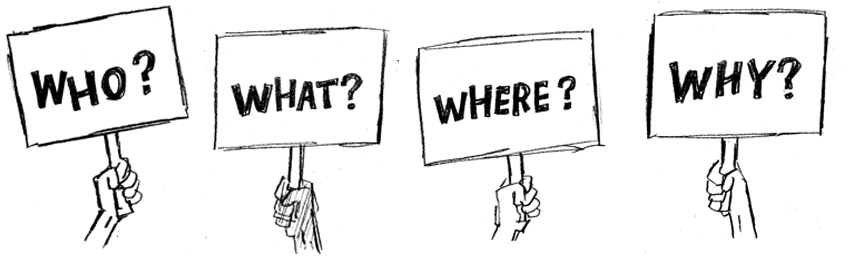
To simplify the Open Media Network (#OMN), we focus on its core goal: creating a human-scale, community-governed media infrastructure that isn’t controlled by big corporate platforms. As we outline to understand and “simplify” the #OMN is to look at its five irreducible functions:
The 5 functions reduces networked publishing to just five basic actions. Everything else – like your feed, notifications, or dashboard – is just the interface.
- Write: Creating the content.
- Tag: Categorizing it, so others can find it.
- Publish: Making it available on the web.
- Federate: Sharing it across different trusted networks.
- Archive: Ensuring it remains accessible over time.
The “#4opens” Framework is built on four principles designed to keep power in the hands of users rather than central authorities:
- Open Data: Information belongs to the community.
- Open Source: The code is free to see and change.
- Open Process: Decisions are made transparently.
- Open Standards: Systems can “talk” to each other without gatekeepers.
Key Concepts for Simplification
- Keep It Simple (KISS): The system should be so simple that anyone can mentally model how it works. If it’s too complex to understand, it’s too complex to govern.
- Social over Technical: Prioritise how people use the tools over how “elegant” the code is, to mediate the #geekproblem (tech that’s too hard for normal people to use).
- Composting the Past: Instead of starting from scratch or repeating old mistakes, the #OMN is about taking the “wreckage” of previous projects and turning them into “fertile soil” for new, federated networks.
- Trust-Based Networking: It moves away from global algorithms and toward small, connected “nodes” of people who trust each other.


@info
This is the project I did not present at #NOAW as was too tired, and did not have enough focus.
Feedback please https://hamishcampbell.com/lets-try-and-simplify-the-omn/ its core to the vision and project of action I outlined.