
Discussion
Loading...

Discussion

  • About
  • Code of conduct
  • Privacy
  • Users
  • Instances
  • About Bonfire
Corey S Powell
@coreyspowell@mastodon.social  ·  activity timestamp 3 weeks ago

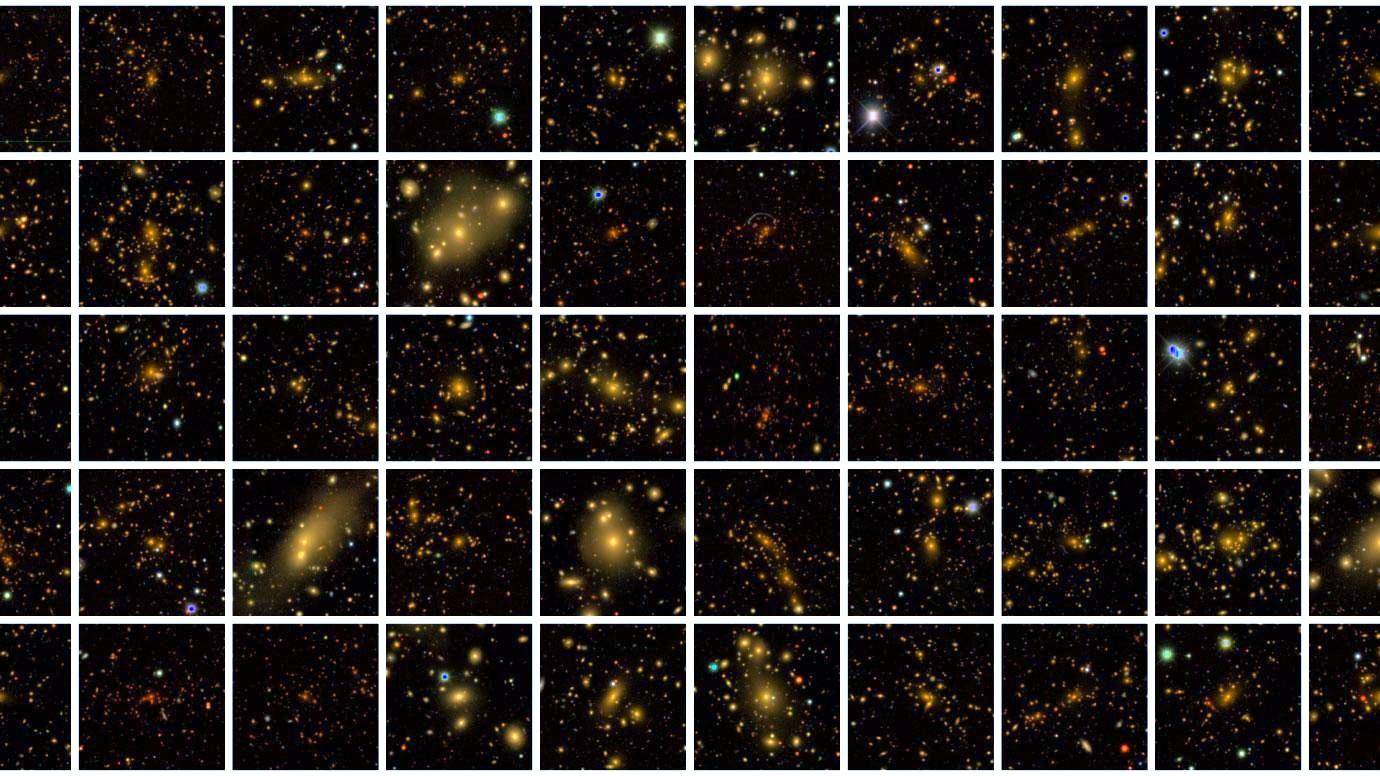
A 6-year survey mapped the biggest structures in the universe. The results are beautiful...and, annoyingly, they fit nicely with the current model of cosmology.

We know there's something missing from that model, but figuring out *what* is not easy!

https://news.uchicago.edu/story/scientists-release-new-survey-biggest-objects-universe #space #science #nature

University of Chicago News

Scientists release new survey of the biggest objects in the universe

UChicago-led study analyzes massive galaxy clusters mapped by the Dark Energy Survey, offers new way to probe cosmic laws
A new study catalogues the universe by mapping huge clusters of galaxies—some of the largest known objects in the universe—offering new insight into how the universe first formed and the rules that govern it today. Image courtesy of the Dark Energy Survey
  • Copy link
  • Flag this post
  • Block
Corey S Powell
@coreyspowell@mastodon.social replied  ·  activity timestamp 3 weeks ago

Contrary to all those click-baity headlines about how cosmology is "broken," scientists are mostly frustrated that it's *not* obviously broken.

When we can find the real cracks, we'll have a path to deeper understanding.

https://noirlab.edu/public/news/noirlab2408/ #space #astronomy #science #physics

A slice of the 3D map of galaxies collected in the first year of the Dark Energy Spectroscopic Instrument (DESI) Survey with annotations identifying key features in the map. Earth is at the tip, with the furthest galaxies plotted at distances of 11 billion light-years. Each point represents one galaxy. This version of the DESI map includes 600,000 galaxies — less than 0.1% of the survey's full volume.

Credit: DESI Collaboration/NOIRLab/NSF/AURA/R. Proctor
A slice of the 3D map of galaxies collected in the first year of the Dark Energy Spectroscopic Instrument (DESI) Survey with annotations identifying key features in the map. Earth is at the tip, with the furthest galaxies plotted at distances of 11 billion light-years. Each point represents one galaxy. This version of the DESI map includes 600,000 galaxies — less than 0.1% of the survey's full volume. Credit: DESI Collaboration/NOIRLab/NSF/AURA/R. Proctor
  • Copy link
  • Flag this comment
  • Block
Florian 'floe' Echtler
@floe@hci.social replied  ·  activity timestamp 3 weeks ago

@coreyspowell This reminded me of... https://aus.social/@Unixbigot/115538898214379306

  • Copy link
  • Flag this comment
  • Block
Log in

bonfire.cafe

A space for Bonfire maintainers and contributors to communicate

bonfire.cafe: About · Code of conduct · Privacy · Users · Instances
Bonfire social · 1.0.1-alpha.8 no JS en
Automatic federation enabled
  • Explore
  • About
  • Members
  • Code of Conduct
Home
Login