Discussion
Loading...

Discussion

Log in
  • About
  • Code of conduct
  • Privacy
  • Users
  • Instances
  • About Bonfire
Daniel Fischer
Daniel Fischer
@cosmos4u@scicomm.xyz  ·  activity timestamp 2 months ago

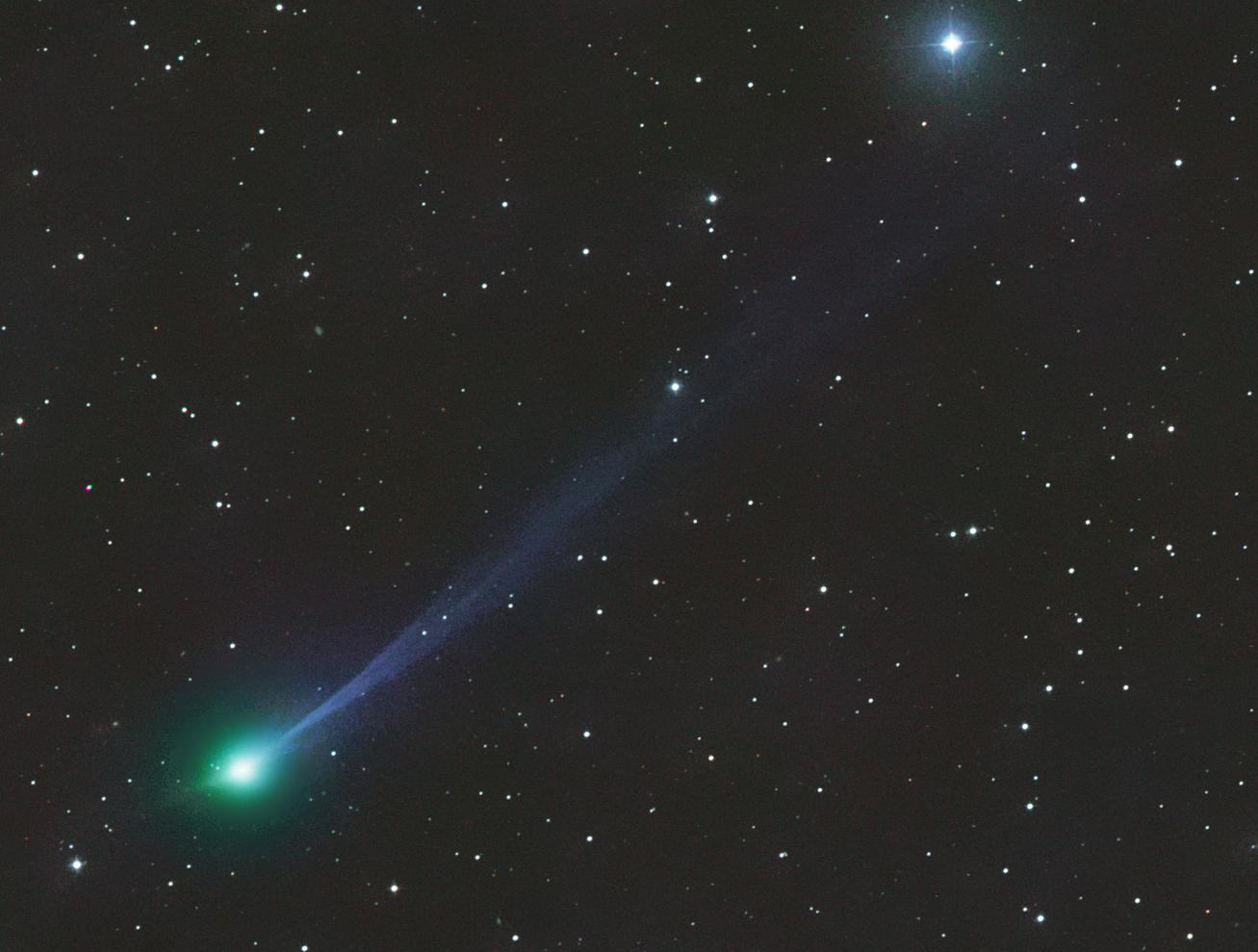
None of the NASA s/c images of #3IATLAS shared at the presser come even remotely close in beauty - and obvious detail - to the current best ground-based images ... like this one by Michael Jäger and Gerald Rhemann with a 12-inch reflector taken this morning: https://www.facebook.com/photo/?fbid=2282405328942953

Image from today.
Image from today.
Image from today.
  • Copy link
  • Flag this post
  • Block
Daniel Fischer
Daniel Fischer
@cosmos4u@scicomm.xyz replied  ·  activity timestamp 2 months ago

All the NASA s/c images of #3IATLAS shared today (and some more) can be found at https://science.nasa.gov/solar-system/comets/3i-atlas/comet-3i-atlas-image-gallery/ now - including this spectrum from the Imaging Ultraviolet Spectrograph on MAVEN taken on 28 September, showing hydrogen emitted from different sources, namely the comet (dim spot on the far left), hydrogen from Mars (bright emission on the right), and hydrogen flowing through our solar system between the planets (dim emission in the middle).
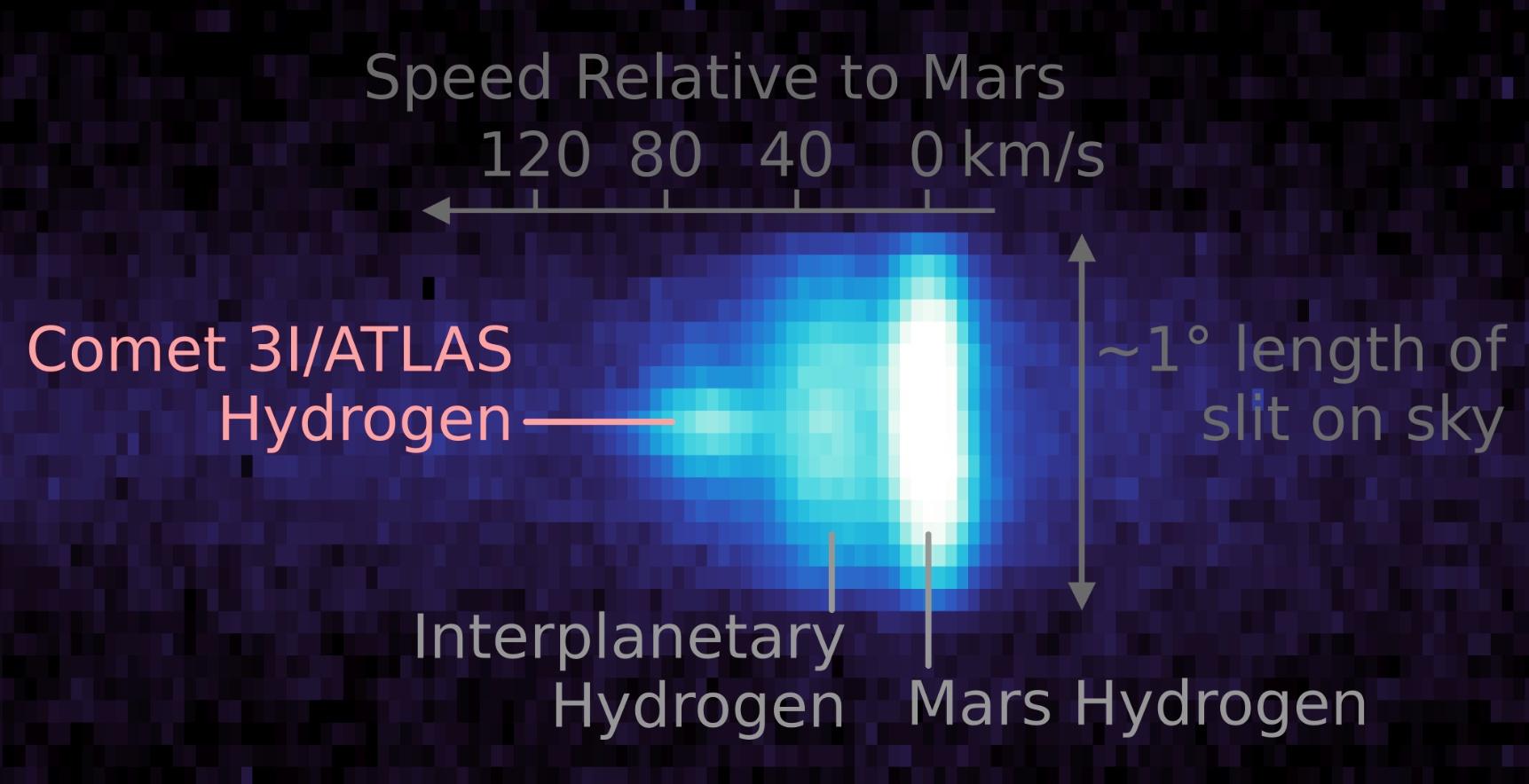
An ultraviolet image composite of the hydrogen atoms surrounding comet 3I/ATLAS, the third interstellar object ever detected by astronomers, as it passes through our solar system. This image was taken on Sept 28, 2025- just days before the comet’s closest approach to Mars - by an instrument on NASA's MAVEN spacecraft, which has been studying Mars from orbit since 2014. The instrument, the Imaging Ultraviolet Spectrograph, takes pictures in the ultraviolet part of the spectrum to reveal the chemical composition of objects. The image shows hydrogen emitted from different sources: the comet (dim spot on the far left), hydrogen from Mars (bright emission on the right), and hydrogen flowing through our solar system between the planets (dim emission in the middle). MAVEN’s spectrograph distinguished the comet’s hydrogen from the interplanetary and Martian hydrogen using a special mode to separate each source by its speed. Hydrogen emission from the comet is confined to the location of the comet on the sky, which is why it is small and round instead of extended.
  • Copy link
  • Flag this comment
  • Block

bonfire.cafe

A space for Bonfire maintainers and contributors to communicate

bonfire.cafe: About · Code of conduct · Privacy · Users · Instances
Bonfire social · 1.0.1 no JS en
Automatic federation enabled
Log in
  • Explore
  • About
  • Members
  • Code of Conduct