Cat 🐈🥗 (D.Burch) :paw::paw:
boosted

here internet, have a kubernetes container escape
here internet, have a kubernetes container escape
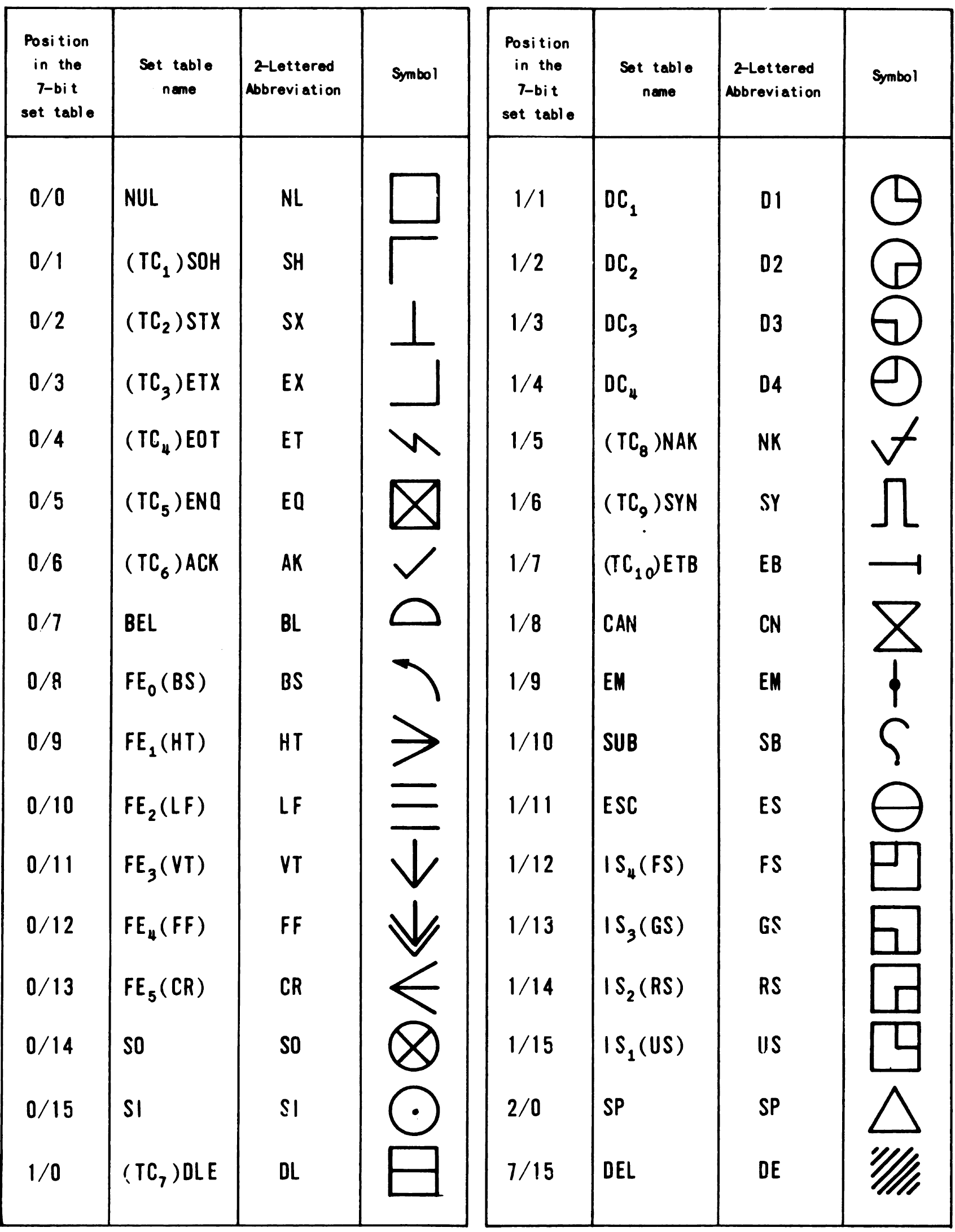
These are alchemical symbols.
I will not be taking further questions at this time (that's a lie yes I will).
https://en.wikipedia.org/wiki/File%3AUS_ASCII_Control_Character_Symbols.png
@gaditb would you say the tech industry is trying to discover the formula to transmute silicon into gold
Synthesis threads are light-weight processes.
i don't think that has any meaning if we're in kernel mode
Each Synthesis thread (called simply “thread” from now on) executes in a context, defined by the TTE.
this is also confusing and unclear
The thread state is completely described by its TTE (see figure 3) containing:
- the register save area;
- the vector table, which points to four kinds of procedures (thread-specific system calls, interrupt handlers, error traps and signal vectors);
- the address map tables;
- and the context-switch-in and context-switch-out procedures.
this is great and should have been the first thing we led off with!
When a Synthesis thread makes a kernel call, we say that the thread is executing in the kernel mode; this is in contrast to having a kernel server process run the kernel call on the behalf of the client thread.
(i still don't know what context the thread is in or what "executing" means)
The
trapinstruction switches the thread into the supervisor state and makes the kernel quaspace accessible in addition to the user quaspace.
why both and not isolated?
Consequently, the kernel call may move data between the user quaspace and the kernel quaspace. Since the other quaspaces are outside the kernel quaspace, were the thread to attempt access to an illegal address, the thread will take a bus-fault exception, even in the kernel mode.
what is an illegal address if we're in kernel mode? why is this a bus-fault? is that true on all processors?
If a thread is not running, it is waiting.
ominous
A waiting thread is blocked for some event or resource. Each resource has its own waiting queue. For example, a thread waiting for CPU is sitting in the ready queue; when the thread blocks for characters from a
ttydriver, it is chained to thettydriver queue.
what is "chained"?
Spreading the waiting threads makes blocking and unblocking faster.
what is "spreading"?
Since we have eliminated the general blocked queue,
why? how?
we do not have to traverse it for insertion at blocking or to search it for deletion at unblocking.
very confusing
A waiting thread’s unblocking procedure is chained to the end of the interrupt handling, so each waiting queue has reduced synchronization due to Code Isolation.
this makes sense though!
Isn't this great, you'll get a wildcat lake based device for just 1299. awesome!
@gleick@mas.to @njf@social.lol @koos@mastodon.green I am aware that address info doesn't explicitly contain race information. But because of how neighborhoods in America work, if a program just generates districts on the basis of geographical proximity, it will almost certainly create majority-white and majority-black districts, and there's no reason to believe that such a system would be better at preventing Black disenfranchisement than humans working with that specific goal in mind, which is what they did before the Supreme Court decided to roll back sixty years of progress and decree that you couldn't do that.
@cholling @njf @koos Now you’re changing the subject. (Or still missing the point—I’m not sure which.) Of course a race-blind algorithm will create majority white and majority black districts. There's nothing wrong with that.
Have you been reading the news? Racist Republicans, enabled and encouraged by the racist supermajority on the Supreme Court, are splitting Memphis, a majority Black city, into three parts in hopes of preventing the state from electing a single Black representative.
@simon_brooke I think you are wrong. It's that simple.
We already produce enough for everyone on our planet to have a civilised quality of life. We only need 30% of Global productivity, Global Energy production, and Global GDP:
https://www.sciencedirect.com/science/article/pii/S2452292924000493?via%3Dihub
And those figures are based on the data fropm September, 2024, before the new Chinese and EU solar farms came online, and before the new automated factories came online in China. The new percentages will be a smaller slice of the overall amounts.
We already have enough Global GDP, Global Energy Production, and Global Resource Production, to produce enough for all 8 billion people on our planet. 😁
We do NOT have enough for all of the billionaires...
@charliejane Really great piece, thanks for this. I also think a lot of your observations could apply to something like religion: really old narratives that have passed through many editors, with a messy accumulation of both good and bad ideas, over which certain groups claim to have authoritative say or control — and ultimately it’s up to each of us to decide which aspects of it to amplify.
@bluejay Yeah that analogy makes a lot of sense to me -- and pop culture does feel like a religion to some folks at least some of the time
@charliejane Really great piece, thanks for this. I also think a lot of your observations could apply to something like religion: really old narratives that have passed through many editors, with a messy accumulation of both good and bad ideas, over which certain groups claim to have authoritative say or control — and ultimately it’s up to each of us to decide which aspects of it to amplify.
@jdp23 yeah i think thats a major part of it. also kind of shows that we havent really managed to get a good answer to the question of what it actually means to have control of your own data on networks whose primary function is to then send out that data to thousands of unknown and untrusted other computers
agreed. a few more things that might factor into it:
self-hosting GTS (or Glitch or Hometown) lets you run software that many people find better than vanilla Mastodon. And for a group of people, local-only posts provide within-community options; these are only available by self-hosting. Other microblogging appviews don't in general provide significantly more functionality than Bluesky (although I guess Anisota's an exception), and there isn't yet any within-community communications (although Blacksky and Northsky are both working on this, and of course there's also permissioned data coming down the pipe). So historically, there's less functional incentive to do it.
Bluesky is (for most people) "a better Twitter", and global search and hashtags are a key part of Twitter. A self-hosted appview that doesn't directly support that functionality is affordable, but either gives up that functionality (making it less attractive) or gets that functionality from something like Constellation (meaning that in reality it isn't self-contained, so doesn't fully accomplish self-sovreignity).
Mastodon by contrast is more "Twitter-like for people who don't like those aspects of Twitter", and even on larger instances you're not getting true global search / hashtags, so it's not as big a deal.
This is tragic, the fall of Bitwarden: https://blog.ppb1701.com/the-quiet-renovation-at-bitwarden
@Migueldeicaza PEs continue to be a blight to small companies. Do you continue to make a great product at a modest profit? Or do you cash out and let a bunch of M&A MBA types take your accomplishments and crush them into shit?
Sad to say, a lot of people will choose to cash out.
@mike What in the embrace, extend, and extinguish ??
The best investment I ever made apparently was spending $91 on a lifetime Plex Pass in 2024, given that in a month that Plex Pass is going to cost $750.
Good God.
The world's first Fedify book, Practical Fedify: Introduction to ActivityPub Microblog Development (実践Fedify——ActivityPubマイクロブログ開発入門), has been published in Japan. This is also the first book I have ever published, and it feels quite surreal that my first book is in Japanese rather than my native language, Korean. This book is an expanded version based on the official English Fedify tutorial, Creating your own federated microblog, with various additions. Yumetsuki Mama (ゆめつきママ) worked on the cute book cover illustration, which features the Fedify dinosaur mascot, Misskey's mascot Ai-chan, and the Mastodon mascot together. It is scheduled to be published in both e-book and print formats on the 22nd by Impress NextPublishing. See also the Amazon Japan.
... configures the firmware to use the found mode if any, reformats (via a shared helper) that mode, allocates the extra framebuffer, & carefully calls generic routines to initialize the main framebuffer.
---
As for the SM712 video-driver...
Its info&fini method is the usual.
Buffer-swapping defers to generic code with additional cache-syncing.
There's numerous I/O helpers, whereas usually there's few if any. Ultimately it might compile down to printf()s for debugging/testing.
4/?
The finalizer might deregister the memory-mapped I/O before deferring to generic code. Whilst the initializer additionally zeroes out the framebuffer.
Then there's datastructures defining the language SM712 graphics cards speak.
The setup routine validates the given dimensions, locates the graphics card on the PCI bus & its framebuffer, fills in mode-info data for info&fini to return, possibly outputs some desired specs, registers memory-mapped I/O, sends an init output, ...
5/6!
Trump Backs Paxton Over Cornyn in Texas Senate GOP Primary
https://www.bloomberg.com/news/videos/2026-05-19/trump-backs-paxton-over-cornyn-in-texas-gop-primary-video?utm_source=flipboard&utm_medium=activitypub
Posted into Profiles @profiles-bloomberg

Sorry, the app encountered an unexpected error

Install bonfire.cafe
Get the full app experience