Joachim
boosted


In retrospect maybe we shouldn't have handed everything to the creators of PayPal and a "hotness ranking" website.
Discussion
In retrospect maybe we shouldn't have handed everything to the creators of PayPal and a "hotness ranking" website.
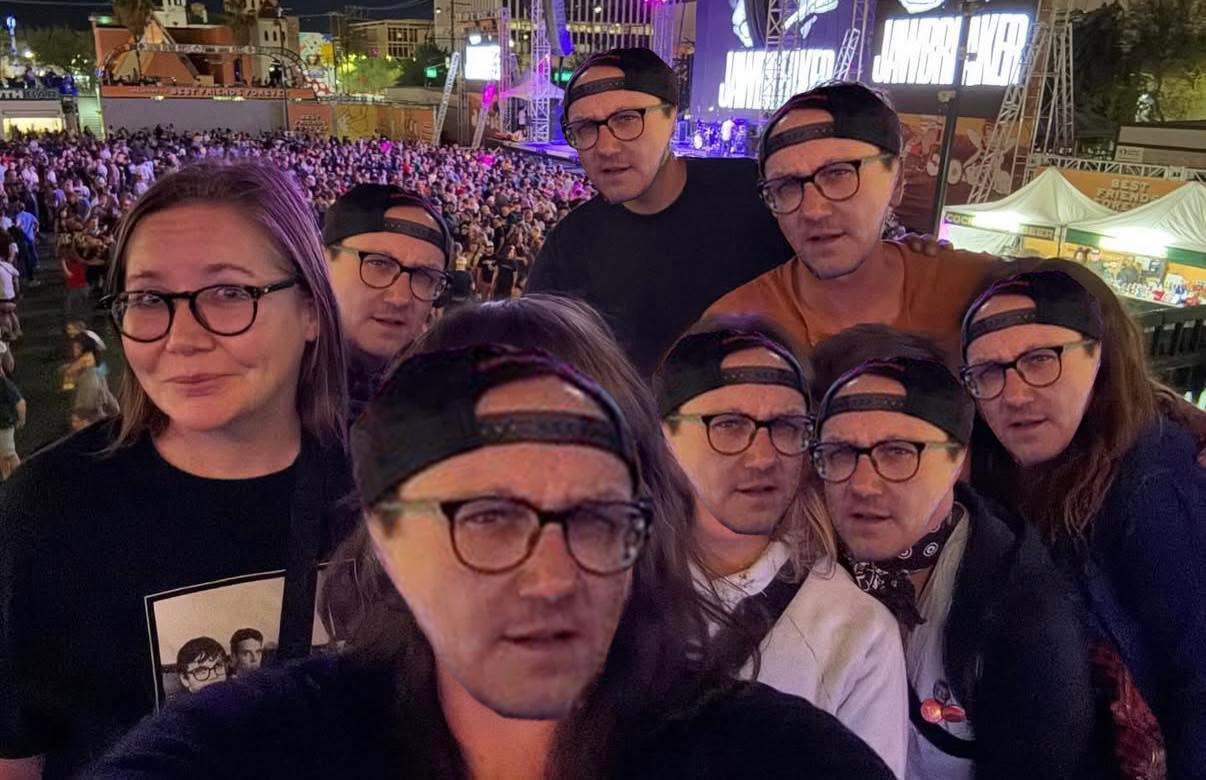
Throwback to this time last year when @KevBot and I went to Best Friends Forever Fest and made friends with this group of strangers and ended up in this group photo (their faces have all been replaced with Kev's because I don't know if they want them blasted all over Mastodon since they are, after all, strangers).
For the record, they were all very nice people. I just think it's funny to paste this weird photo of Kev over and over again because he looks really dubious in it.
@rolle Muutama päivä sitten tuli vastaan hyvä pitkä kooste EU:n tietoturva-konferenssista. Siellä Ukrainan sähköverkon toiminnan turvallisuudesta vastaava SOC oli kertonut miten olivat joutuneet tilanteeseen, jossa puolet henkilökunnasta oli otettu pois, koska ihmiset oli lähetetty rintamalle. Ainoa mahdollisuus selvitä tilanteesta oli automaatio, jonka avulla ovat saaneet nopeutettua asioiden diagnosointia ja tuotettua alustavia ehdotuksia ihmis-työntekijöille. Ilman AI-pohjaista automaatiota monella kansalaisella ei olisi sähköjä kotonaan, koska Ukrainan sähköverkko on vain noin ~15 ihmisen kokoisen SOC-tiimin varassa.
Lähinnä se, että moni ei ymmärrä miten suuri osa tietokoneista ja matkapuhelimista on ihan puhtaasti automaation varassa. Puhelinverkot eivät toimisi ilman sitä, kirjeet eivät päätyisi koteihin ilman sitä, jne. Vaikka ei tykkäisikään tietynlaisesta (isojen firmojen pyörittämästä) automaatiosta, ei se automaattisesti (köh) tarkoita, että kaikki muukin automaatio olisi pelkkää pahaa.
@autiomaa Juuri tämä. Olen automatisoinut asioita 20 vuotta, koska rakastan bashia. Isoin haaste automatisoinnissa on se, jos data ei olekaan standardimuotoista. Tekoälyn avulla ei-standardimuotoisen datan automatisointi vihdoin onnistuu. Tämä ei ollut aikaisemmin mahdollista. Sinällään vain yksi steppi lisää automaatioon.
Moni myös unohtaa, että tekoäly ei ole aina 100% stokastista tai sattumanvaraista. Sitä voi valjastaa monenlaiseen käyttöön ja finetuunattuna virheitä ei synny. Jos tekoälyllä on vain yksi tehtävä, eikä se ole vapaana juokseva agentti, se tekee sen mitä pitääkin.
@sundogplanets
Even worse, slowing starlink for Ukraine apparently was musk's idea and trump said okay.
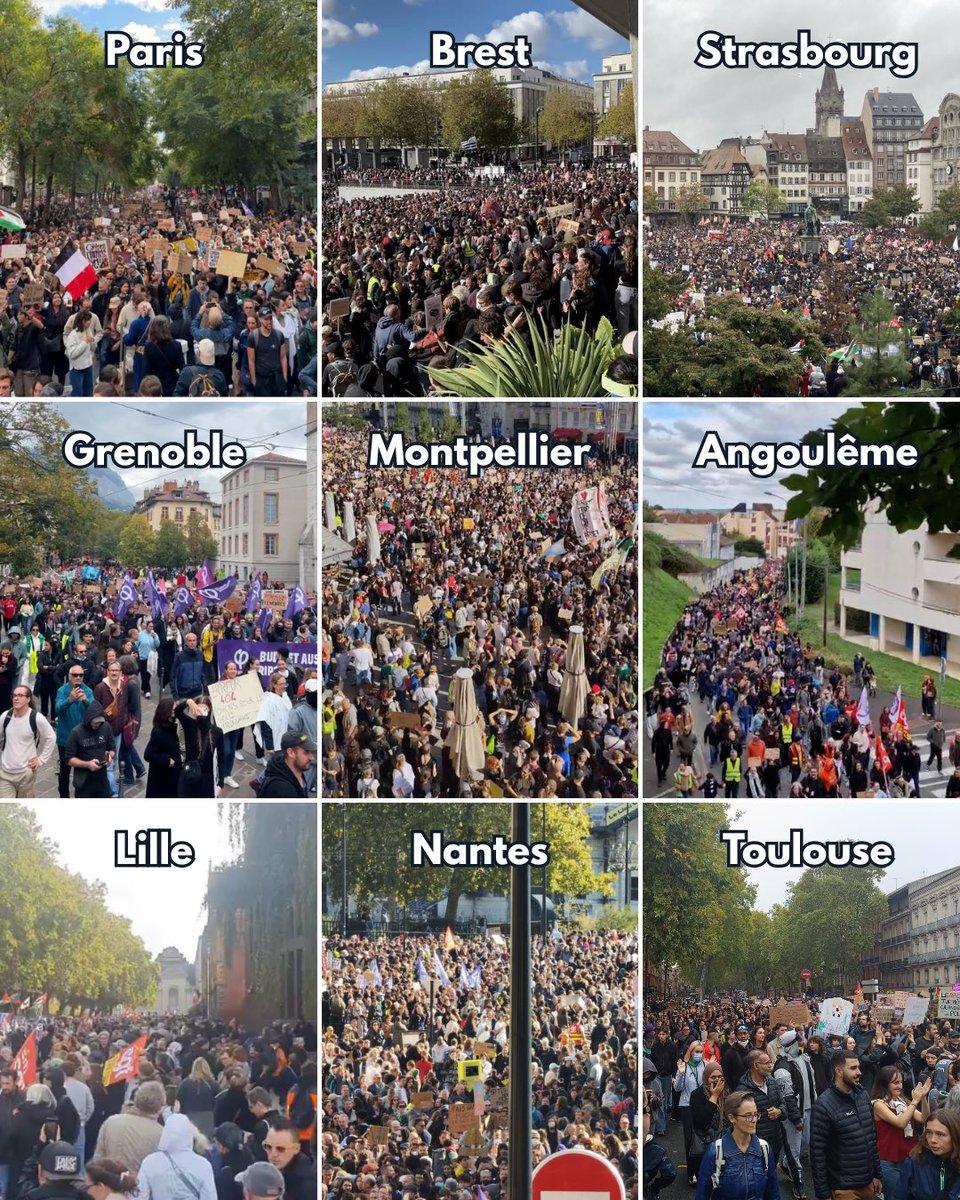
RT: @PaulVannierFI Ce #17octobre que les chaines d’info veulent vous cacher.
Kaikkea sitä näkeekin. Jotkut siirtyvät pois Linuxista, koska Linus Torvalds käyttää tekoälyä. Ei siinä sinällään mitään, jos se jäisi siihen että tekee omat arvovalintansa. Mutta usein paheksutaan niitä, jotka esimerkiksi jatkavat Linuxin käyttöä. Samaa ilmiötä olen nähnyt esimerkiksi tekoälyn, lihansyönnin, autoilun, black metallin kohdalla. Gatekeeppaus on raskasta.
Jokainen saa elää periaatteidensa mukaan. Mutta jos kaukainenkin yhteys tulkinnanvaraiseen paheksuttavaan asiaan pilaa kaiken, menee elämä aika vaikeaksi.
Näissä asioissa usein myös unohtuu hyvät asiat. Esimerkiksi itse olen elänyt 37 vuotta ilman autoa, matkustelen lentokoneella erittäin vähän ja keskityn esimerkiksi palvelinvalinnoissa ja työssäni ohjelmoijana minimoimaan hiilijalanjäljen. Mutta koska syön lihaa (vegaanipäivistä viis) ja käytän tekoälyä työkaluna, olen yksi saatana.
Oltaisiinko ihmisiä toisillemme? En jaksaisi olla jatkuvasti "aktivistien hampaissa".
@rolle Joskus tulee kyllä mieleen, että tietynlaiset aktivistit ovat ajamansa asian yksiä pahimmista vihollisista. Tietysti on asioita, joissa kompromissin paikkaa ei ole, kuten vaikka orjuus tms. mutta jos maailman värit ovat musta tai valkoinen, niin aika vaikeaa sitä on saada kovinkaan hyvää palettia muiden mielipiteisiin saati valintoihin vaikuttamiseksi.
most of the protests in france were tear gassed before they even started. here too. safe to say cops may have had orders from the government
#frpol #france #17octobre
@antonioschettino Totally missed this. Is there any tangible outcome, write-up or record of this that you know of?
@jeroenbosman not sure... I'll ask some colleagues who co-organized the event. If you don't hear from me, please feel free to send a reminder :)
@mediapart
Les lycéens cagoulés qui sont là pour casser flics et vitrines ne méritent que mépris
Wooo birds!! Saw a common loon for the first time in a while, and a juvenile great black backed gull.
Throwback to this time last year when @KevBot and I went to Best Friends Forever Fest and made friends with this group of strangers and ended up in this group photo (their faces have all been replaced with Kev's because I don't know if they want them blasted all over Mastodon since they are, after all, strangers).
compte rendu manif #17Octobre #Dunkerque :
on a manifester sous la pluie, beaucoup de jeunes/lycéens avec leurs parents (ou sans). pas énormément de monde quand même (j'ai pas compter)
on a chanté,on a détesté la police, on a emmerdé le front national (oui old school). il y avait une poussette (et le bébé dort au milieu des slogans).
j'ai compter 1 fumigènes, 3 pétards et zero lacrymogènes (il y avait quelques crs en tenue mais aucune charge/action).
a vous les studios...
@rolle Muutama päivä sitten tuli vastaan hyvä pitkä kooste EU:n tietoturva-konferenssista. Siellä Ukrainan sähköverkon toiminnan turvallisuudesta vastaava SOC oli kertonut miten olivat joutuneet tilanteeseen, jossa puolet henkilökunnasta oli otettu pois, koska ihmiset oli lähetetty rintamalle. Ainoa mahdollisuus selvitä tilanteesta oli automaatio, jonka avulla ovat saaneet nopeutettua asioiden diagnosointia ja tuotettua alustavia ehdotuksia ihmis-työntekijöille. Ilman AI-pohjaista automaatiota monella kansalaisella ei olisi sähköjä kotonaan, koska Ukrainan sähköverkko on vain noin ~15 ihmisen kokoisen SOC-tiimin varassa.
Lähinnä se, että moni ei ymmärrä miten suuri osa tietokoneista ja matkapuhelimista on ihan puhtaasti automaation varassa. Puhelinverkot eivät toimisi ilman sitä, kirjeet eivät päätyisi koteihin ilman sitä, jne. Vaikka ei tykkäisikään tietynlaisesta (isojen firmojen pyörittämästä) automaatiosta, ei se automaattisesti (köh) tarkoita, että kaikki muukin automaatio olisi pelkkää pahaa.

The problem extends beyond government. The same Reagan-era push to privatise was accompanied by (and was often driven by the same ideas as) a push to outsource and off-shore things in companies.
The theory is sound. Any company has some things that they are good at and where they make money by being good at these things. They make some kinds of things better / faster / cheaper than competitors and that’s their core competency. Everything else that they do is a supporting activity. A company that makes components for jet engines needs people to clean the offices, to cook in the canteen, to manage payroll, and so on. These jobs don’t make money for the company, they exist to enable the jobs that make money.
The problem with having the support rôles in house is that your company may not be very good at them. And you many not need an integer number of them. This makes a huge amount of sense for small businesses. If you’re a corner shop, you need an accountant to audit your accounts at least once a year. Having an accountant on staff wouldn’t make sense (a good accountant probably doesn’t want to work full time for a corner shop, and you don’t have enough work to justify more than a small fraction of their time). Even if an outsourced accountant costs 2-3x more per hour than a staff accountant, you’ll get much better value.
The first problem comes with scale. It turns out that big companies will need multiple full-time people in these rôles. Firing your legal department and putting a law firm on retainer will be more expensive because now, rather than a few lawyers paid a reasonable salary with occasional consultation from external experts, you’re paying full-time hours at an hourly contracting rate and paying a law firm’s profit margin as well. The only way this makes sense is if they are hiring much better lawyers than you could hire for the same rate.
And that’s the second problem. It turns out that a lot of support rôles are not actually fungible. People who do these things in house learn the specific requirements of the company, whereas outsourced workers are going to treat you as an example of a generalised model. And, because you’re one of a dozen customers they work in, they’re far less invested in your success than if their salary depended on your company succeeding.
[ Note: some of this was also driven by accounting and accountability dodges. Payroll and outsourced spending are accounted differently and there are various tax things that often made the latter cheaper. And sometimes it’s useful for an executive to be able to say ‘we contracted a company to do this and they are supposed to be experts but it turns out that they suck’ rather than ‘employees that we hired screwed up’. ]
This accompanied a push to off-shore. Maybe an outsourced company can’t hire competent people here more cheaply (per unit competence) than you can. But what if you let them hire anywhere in the world? Maybe you can find people willing to work for below the local minimum wage. And now you have a much lower cost, but at the expense of much weaker accountability. Still maybe fine for things that you don’t care about, but a disaster if they’re things where quality matters.
All of this gets applied to government and it misses on a bunch of core problems:
First, government’s are huge. When a company can exist with a single customer, it’s just overhead. It isn’t likely to be more efficient than the customer running it as an in-house division. If you think companies are more efficient than civil service organisations, make it a publicly owned company where the government is the only shareholder and therefore the organisation the company is accountable to.
Second, the civil service’s core competency is delivering services uniformly to citizens. That’s quite different from a commercial setting where it’s fine for a company to focus on the most profitable 80% or even 20% of the market. We’ve seen this in the UK when the Royal Mail’s parcel delivery monopoly was broken. Companies sprang up to deliver only in cities (where the distances are smaller so the per-parcel costs are lower) and could undercut the publicly funded alternative that has a uniform cost for the whole country. This eventually led to the costs for Royal Mail to deliver parcels going up. It also caused a load of externalities, because now we often see 5+ delivery vans per day on our road instead of one, which increases congestion, pollution, and wear on the roads.
And that brings me to the final problem. A lot of what the government provides is infrastructure. If you run infrastructure at a profit, you are starving the rest of the economy. Infrastructure exists to enable other things. The cheaper the infrastructure is at point of use, the more it enables. If you outsource operation of infrastructure, it’s really hard to get the incentives right. It can still work, but you need to be very careful. For example, privatising rail and funding the operators with ticket sales is a disaster because you incentivise running the minimum number of trains at the highest price. You might have more success if you set comfort tiers (leg room, speed, available WiFi, and so on) and paid them a per-passenger subsidy that goes up for each tier, but even then you need to model the pricing curves to make sure that the companies will make the most money if they deliver the things that you want (ideally, fast, frequent, comfortable trains that make people sad when they have to drive instead of taking a train).
The final macroeconomic issue is that money that the government pays in salaries is immediately reinvested in the local economy. The government can decide where to put bits of the civil service. Putting moderately large civil service organisations in areas in need of economic development is an easy way of directing funding to a regions (see the DVLA in Swansea as a case study, or GCHQ in Cheltenham). Secondary industries spin up either to support or to poach qualified staff (which leads to staffing churn, but is also a long-term investment in local industry). In contrast, a big chunk of payment to an outsourced company will go to shareholders, who are either not based in the country or who are then investing outside. This has far less impact (and even less controllable impact) on the country’s economy.
But both public and private ownership tend to be pushed for ideological reasons rather than starting with the goals and then trying to determine the best way of delivering.
@david_chisnall @solaris @mildpeach @kottke
Very good analysis of erroneous beliefs that are built into the privatisation philosophy of government!
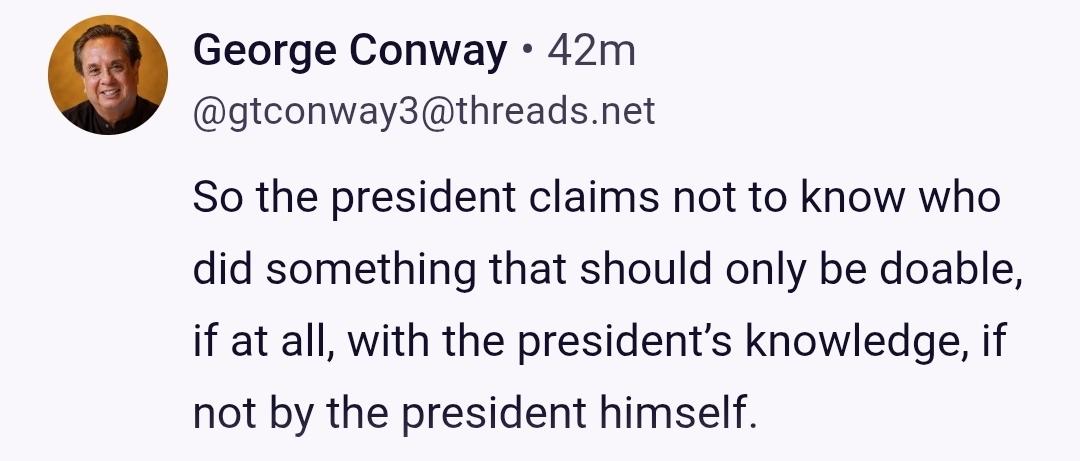
The lies about the Starlink Ukraine disruption have reached absurdity, as George Conway points out...
"So the president claims not to know who did something that should only be doable, if at all, with the president's knowledge, if not by the president himself."
And, the restrictions remain in place right now.
@wlaatje "P" van politie...
@paulmelis dan is het dus eigenlijk een inladen bord 🙈😜
@spla Bé, aquí trobo que tenim un punt que no coincidim.Per mi la corda "està donada" i ara s'està desfilant tota ella perquè s'acabi de trencar. La gent encara els vota, perquè no poden concebre ni assumir, que tots aquests partits+ polítics "estan dirigits" (i a vegades, presumptament coaccionats) per Ñ i diguem-ne alguna ment pensant "comprada" fent el doble joc...
@Caelumtangi encara no veuen la realitat i ens perjudica
Bonjour à tous et à toutes !
Pour information, une vague de spams a lieu à l'heure actuelle, de compte envoyant un lien de partage google (genre google.com/share.google/blabla) et mentionnant de nombreux mastonautes.
Merci à celles et ceux qui nous les ont signalé, on a fait un gros ménage (suspendu plus de 180 comptes d'autres instances !)
Il n'est normalement plus besoin de nous les remonter : ils seront suspendus automatiquement à partir de maintenant.
merci de votre attention.
I'm more upset than I've been in a while.
Windows 11 sets the default documents folder to onedrive\documents. Anything that gets saved there gets backed up to one drive. This includes various save games, all my Reaper stuff, and various other odds and ends that I like to, you know, save.
To save disc space, OneDrive also defaults to files being online-only. They're not stored on your device, they're just listed there. So despite what they call it, this is in fact not a backup at all, because it doesn't create an extra copy. It is actually just transferring your most precious, irreplacible, personal files to Microsoft in the background, and trusting that nothing will happen. You can see where this is going, but just to underline the point with a bleeding fucking dagger, I did not ask for any of this, I just clicked save like I have done for the last twenty or so years of my life using Windows.
Since I don't care about and have never intentionally used onedrive, I signed out of it. Flash forward six months, the files that I thought were on my computer (because I can go see them there in the folder) are in fact gone from my hard drive, and also Onedrive nuked them from orbit.
Years of my life, gone without a trace. Thanks so much, Microsoft. Whoever came up with all those ideas probably got massive performance bonuses, because we're in the worst timeline.
Goodnight.
Not Found.

Install bonfire.cafe
Get the full app experience