Time to get absurd with the Top 8 of the Weird Group: https://forms.gle/uQqtprjo5McsnEcz6


@desertbus ZippoTricks McEdgelord has to go all the way
Discussion
Time to get absurd with the Top 8 of the Weird Group: https://forms.gle/uQqtprjo5McsnEcz6
@desertbus ZippoTricks McEdgelord has to go all the way
It's been a tough few years for MacStories.
An explanation of why we resumed posting on X, and what comes next:
@viticci this is pretty… gross. Enjoy the n@zi site.
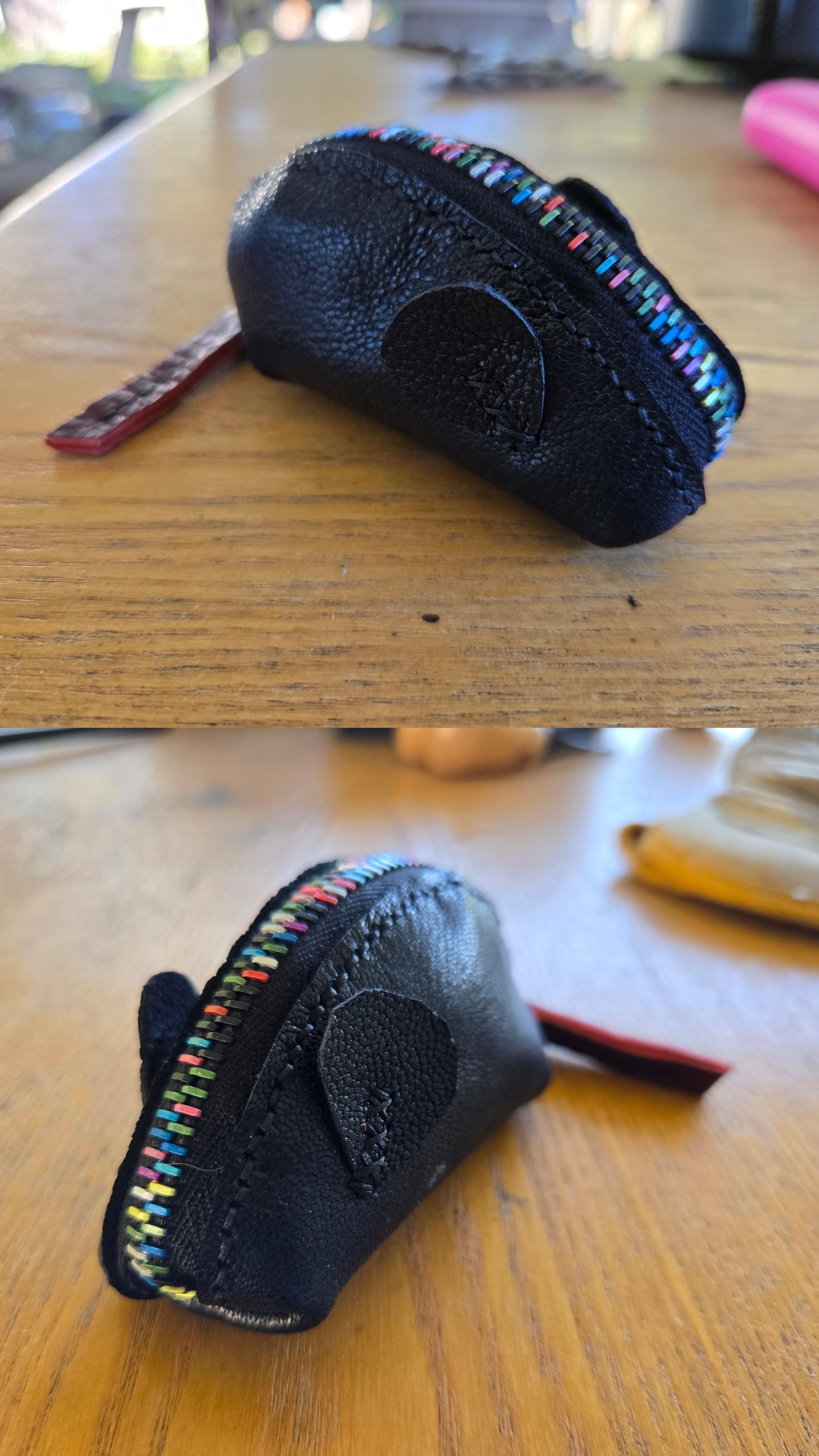
mousie
(made from a pattern)
How to be more alive — the samurai guide to dying every day https://t.co/g32PqD1GRN
RE: https://mastodon.social/@thefunnypages/117237630343729697
this is me 😿
NeufAns : « Ça doit être horrible d'être bourgeois. Moi j'veux pas être un bourgeois. »
OpenAI claims that they used 300 billion output tokens from a swarm of ~10,000 concurrent instances of an internal model that is almost certainly larger and more expensive to run than GPT-6. That's the total token output, including exploring related problems, which, along with spying on other researchers work via codex, "led them to the solution," so that is the minimal accounting of what led to the solution.
All of OpenAI's API costs are presumed to be subsidized, lower than the actual cost of running the models. If one were to pay the API costs for 300 billion tokens for GPT-6, at $75 per million output tokens with long context, that would be 22.5 million dollars of tokens (the minimum, assuming 100% cached output with short context is still 3.75 million, but that's an unrealistic minimum). OpenAI apparently also had a full team of people working on this, so 22.5 million doesn't include their salaries, etc.
Tristan Buckmaster only has one grant listed from NSF, a CAREER grant for $450k from 2022 through 2028, averaging $70k per year the last three years.
If i search the NSF grants database for any award from the Division of Mathematical Sciences with "navier-stokes" in the abstract (surely, imprecise, and most likely a sizeable overcount because this is "all work that mentions the equation" not "work spent specifically on the millenium prize proof"), then i get $135m worth of awards since 1978, including large training grants for centers, etc. so $22.5m would be ~16% (or, roughly, 1/6th) of all funding that NSF has allocated to research that mentions the problem in their grants for almost 50 years.
If i then use NSF's API to find all the publications that have come from these grants, I find 4,928 papers. I can match 4264 to entries in OpenAlex (85%), yielding 142,606 citations (1/6 of which is 710, and 23,767, respectively).
So, assuming we believe OpenAI's accounting, the headline is basically "OpenAI researchers seem to have stolen the work of mathematicians that were using Codex, and then spent 1/6 of all the funding NSF has given with abstracts mentioning navier-stokes over the past 50 years, which amounts to an entire subdiscipline of work, feeding, housing, and training generations of mathematicians, in order to generate a proof two of the statements in a millenium prize problem"
I dont know how NSF funds math, but i sort of doubt they give grants for "try to solve millenium problems full stop." idk, maybe an alternative strategy would be to just "fund basic research," because even in this specific domain of an axiomatic universe with an unambiguously evaluable solution to a problem where brute force is possible, "AI" doesn't seem like it's really that much of a bargain, and "paying people to be experts at things" has lots of known good side effects like "someone actually understands the solution"
@jonny many thanks for doing the calculations! The numbers are crazy.
That trailer makes him look like a psycho John Wick with the whole gun stuff.
@ajroach42 that’s all there is to write!
U.S. forces destroyed five Iranian oil carriers on Tuesday after Tehran launched ballistic missiles at an American warship twice in recent days, the U.S. military said. https://www.japantimes.co.jp/news/2026/09/09/world/us-strikes-iran-tankers/?utm_medium=Social&utm_source=mastodon #worldnews #iran #us #middleeast #straitofhormuz #oil #usmilitary #donaldtrump
@ajroach42 This is really an astounding effort.
OpenAI claims that they used 300 billion output tokens from a swarm of ~10,000 concurrent instances of an internal model that is almost certainly larger and more expensive to run than GPT-6. That's the total token output, including exploring related problems, which, along with spying on other researchers work via codex, "led them to the solution," so that is the minimal accounting of what led to the solution.
All of OpenAI's API costs are presumed to be subsidized, lower than the actual cost of running the models. If one were to pay the API costs for 300 billion tokens for GPT-6, at $75 per million output tokens with long context, that would be 22.5 million dollars of tokens (the minimum, assuming 100% cached output with short context is still 3.75 million, but that's an unrealistic minimum). OpenAI apparently also had a full team of people working on this, so 22.5 million doesn't include their salaries, etc.
Tristan Buckmaster only has one grant listed from NSF, a CAREER grant for $450k from 2022 through 2028, averaging $70k per year the last three years.
If i search the NSF grants database for any award from the Division of Mathematical Sciences with "navier-stokes" in the abstract (surely, imprecise, and most likely a sizeable overcount because this is "all work that mentions the equation" not "work spent specifically on the millenium prize proof"), then i get $135m worth of awards since 1978, including large training grants for centers, etc. so $22.5m would be ~16% (or, roughly, 1/6th) of all funding that NSF has allocated to research that mentions the problem in their grants for almost 50 years.
If i then use NSF's API to find all the publications that have come from these grants, I find 4,928 papers. I can match 4264 to entries in OpenAlex (85%), yielding 142,606 citations (1/6 of which is 710, and 23,767, respectively).
So, assuming we believe OpenAI's accounting, the headline is basically "OpenAI researchers seem to have stolen the work of mathematicians that were using Codex, and then spent 1/6 of all the funding NSF has given with abstracts mentioning navier-stokes over the past 50 years, which amounts to an entire subdiscipline of work, feeding, housing, and training generations of mathematicians, in order to generate a proof two of the statements in a millenium prize problem"
I dont know how NSF funds math, but i sort of doubt they give grants for "try to solve millenium problems full stop." idk, maybe an alternative strategy would be to just "fund basic research," because even in this specific domain of an axiomatic universe with an unambiguously evaluable solution to a problem where brute force is possible, "AI" doesn't seem like it's really that much of a bargain, and "paying people to be experts at things" has lots of known good side effects like "someone actually understands the solution"
@ajroach42 I like that it's a project that outlived it's creator, gives it a gravity.
@woof immediately pocketing this header so the next time a boomer whines they NEED the ny times
There's a certain segment of the population that will punch themselves in the dick from here to eternity instead of ever admitting they're wrong.
Not Found.

Install bonfire.cafe
Get the full app experience